Zebec Protocol
2022
Product Design · Research · 2022
Role: Product Designer · Platform: Web App · Live: app.zebec.io
About the Project
Zebec is a multisig continuous settlement protocol — it lets users send payments and distributions every second. The team noticed that many of their users were interested in using the DCA investment strategy, but the platform did not have a built-in feature to support it. So I designed one — Zebec's DCA feature, from dashboard to creation flow.
Overview
The work covered the three surfaces the feature needed: a DCA dashboard, a transaction history, and the creation flow. The bar throughout was that someone who had never heard of dollar-cost averaging could set one up and trust what it was doing.
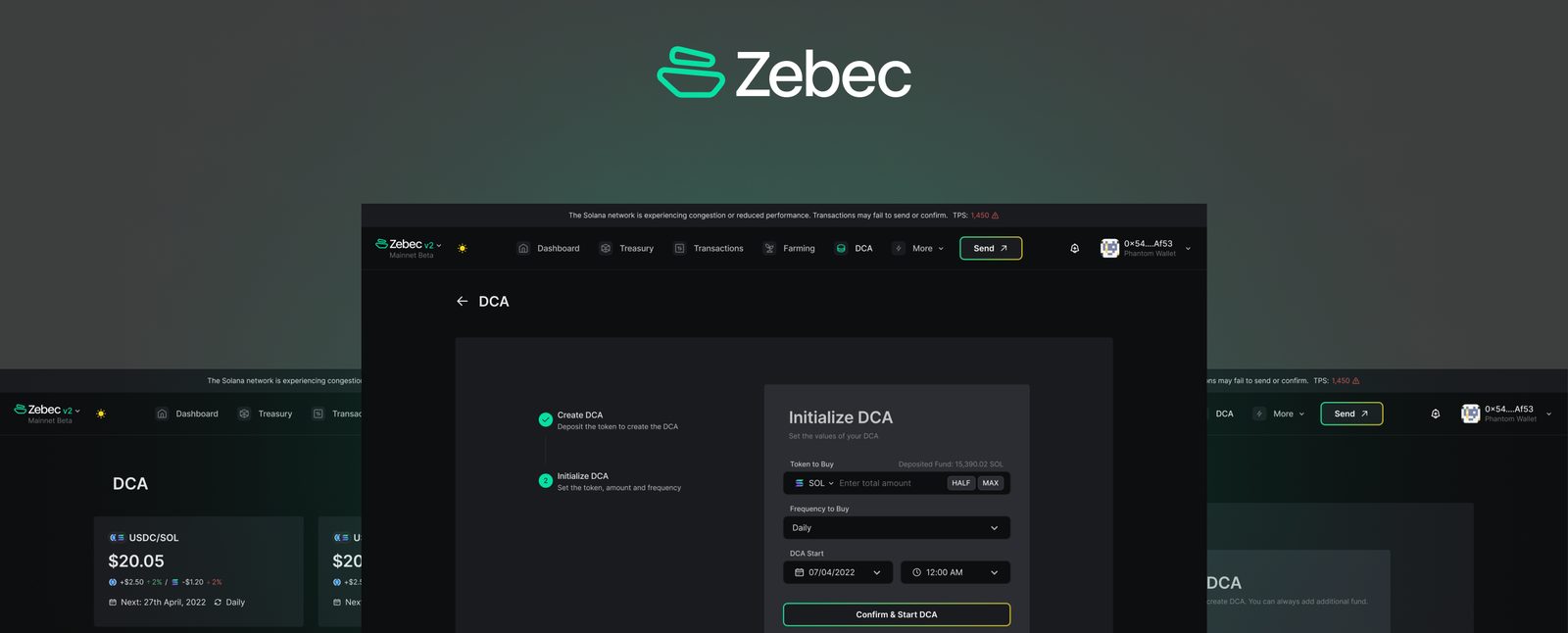
The DCA feature as it shipped — recurring on-chain investments inside Zebec's existing platform.
The Challenge
The main challenge was to design and implement a DCA feature that was easy to understand and use, especially for users who may not be familiar with the investment strategy. It was also important to ensure that the feature was stable and reliable, and that it could be easily integrated with the existing platform.
The Proposed Solution
To address these challenges, I worked closely with the product manager to create a new user interface that clearly explained the concept of DCA and how it works. I gave users controls to shape their investments around their own goals and risk tolerance, and I tested the feature extensively — gathering feedback from the team and making improvements as we went.
Implementation
DCA Dashboard
My primary goal was to create an interface that was easy to understand and use, and that provided users with the tools and information they needed to effectively implement the DCA investment strategy.
To achieve this goal, I started by researching the concept of DCA and understanding the specific needs and challenges of users who might be interested in using this investment strategy. I also gathered feedback and insights from experts in the field to get a better understanding of best practices and potential pitfalls to avoid.
Based on this research, I developed a clear and concise explanation of the concept of DCA and how it works, and I included interactive tools and resources that allowed users to customize their investments based on their specific goals and risk tolerance. For example, users could choose the frequency of their investments and the amount they wanted to invest each time.
Throughout the design process, I worked closely with Samundra (part of the development team) to ensure that the dashboard could be easily integrated with the existing platform.
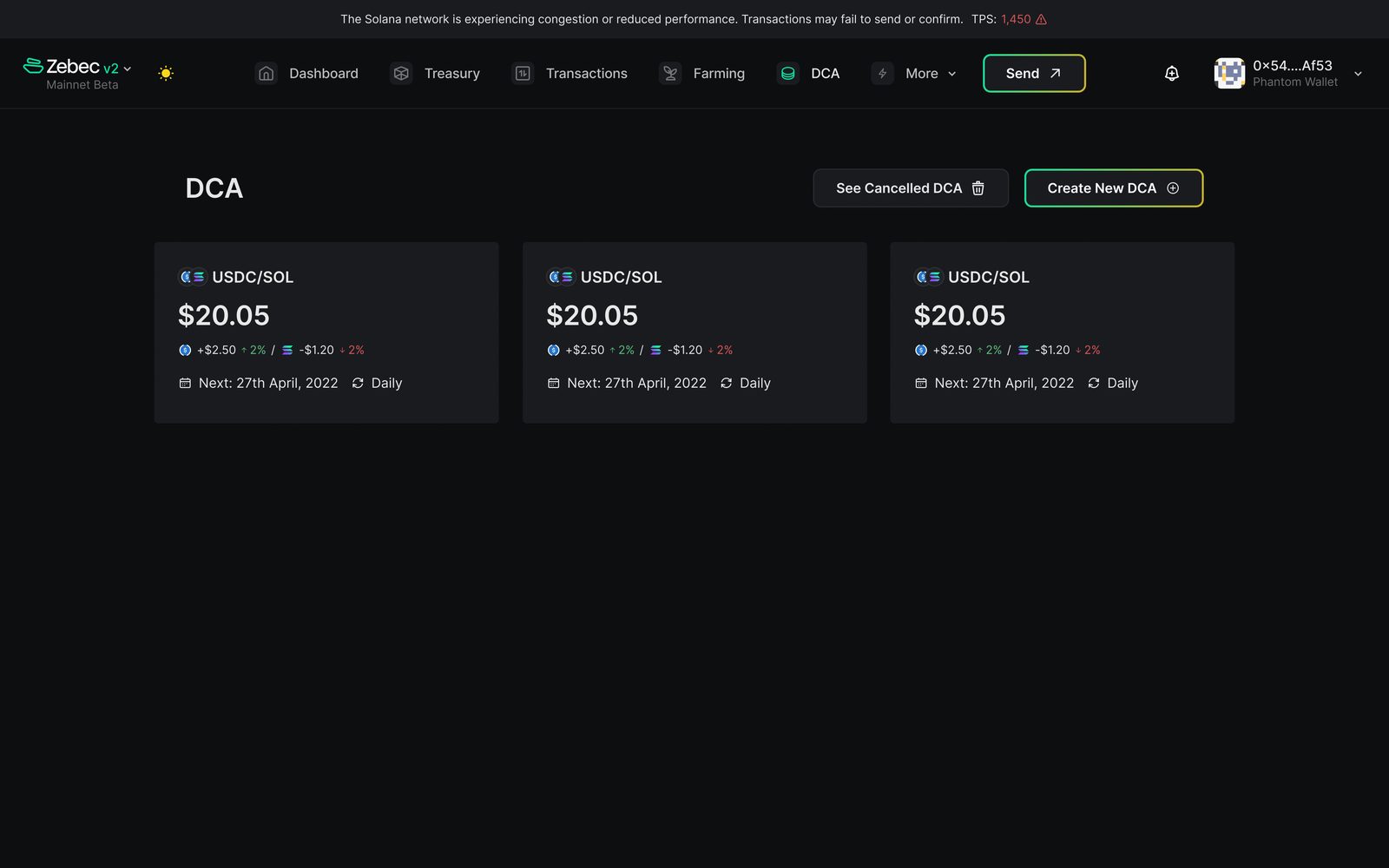
The dashboard — every active DCA, its schedule, and what it has bought so far, in one view.
Transaction History
I designed the transaction history to include a clear record of each investment made by the user, including the date, amount invested, action performed and asset type.
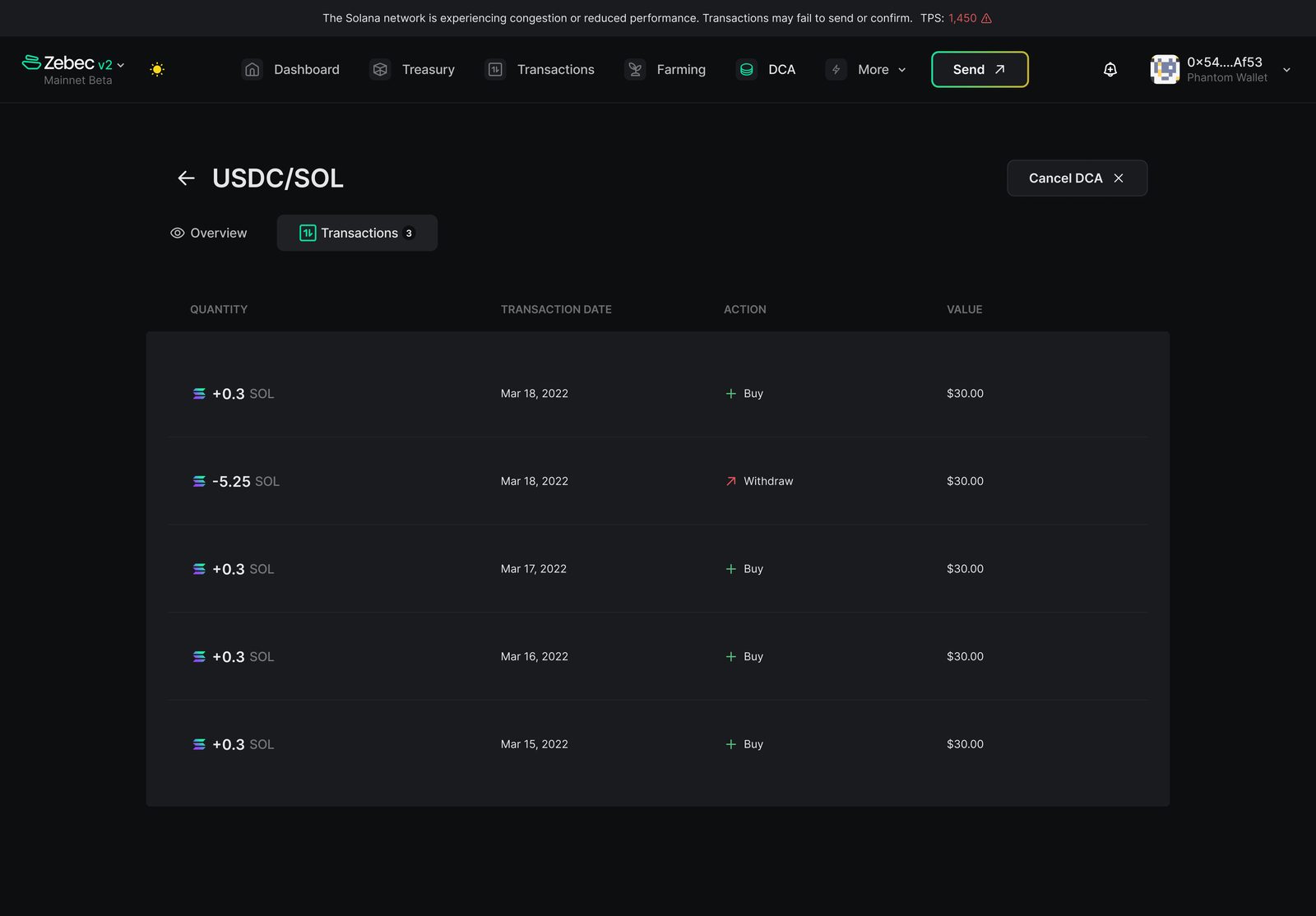
Transaction history — date, amount, action and asset for every investment made.
DCA Creation
Users select and deposit their desired asset, then set the options for initializing the DCA investment — the frequency of investments, the starting time, and the amount to be invested each time.
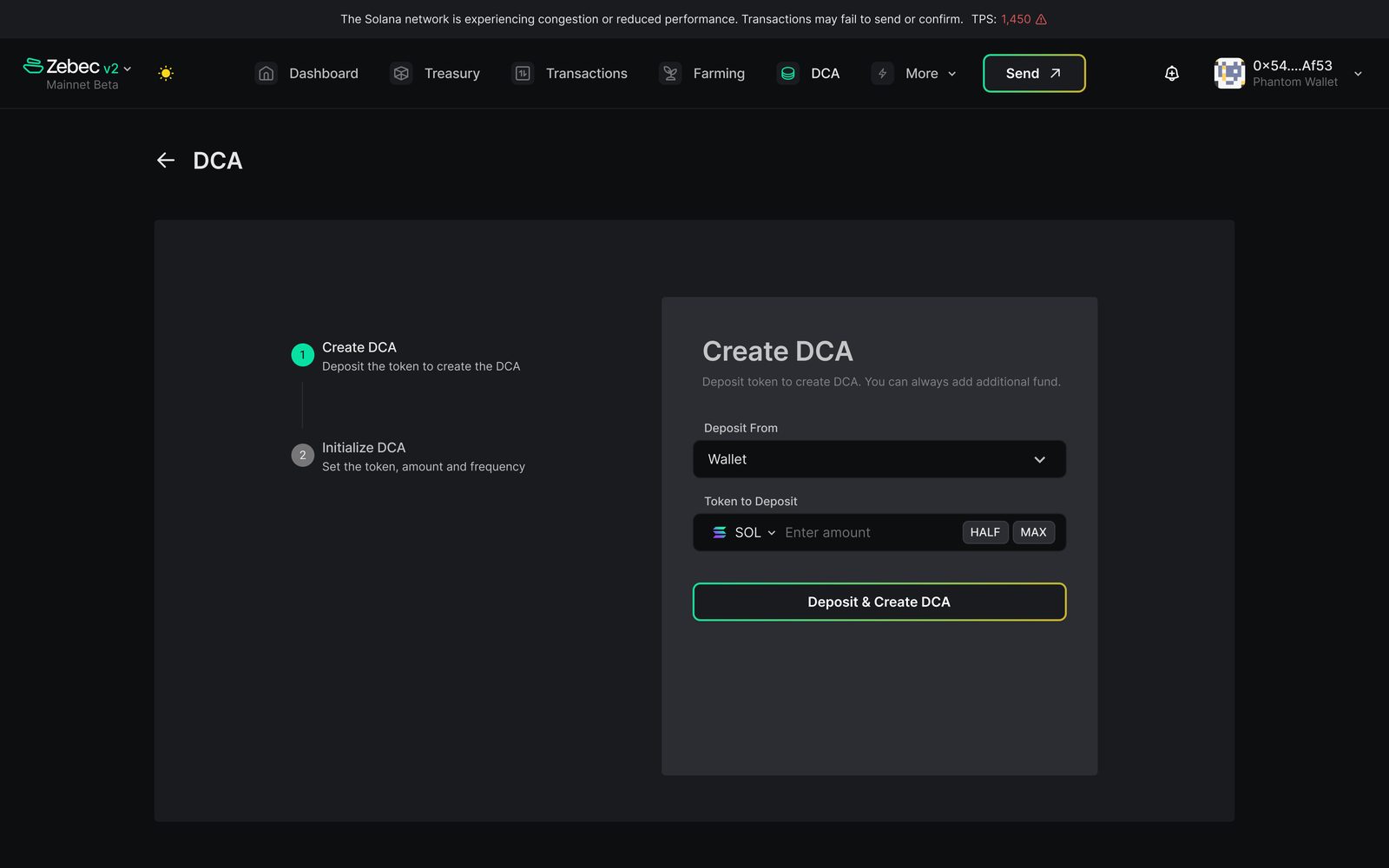
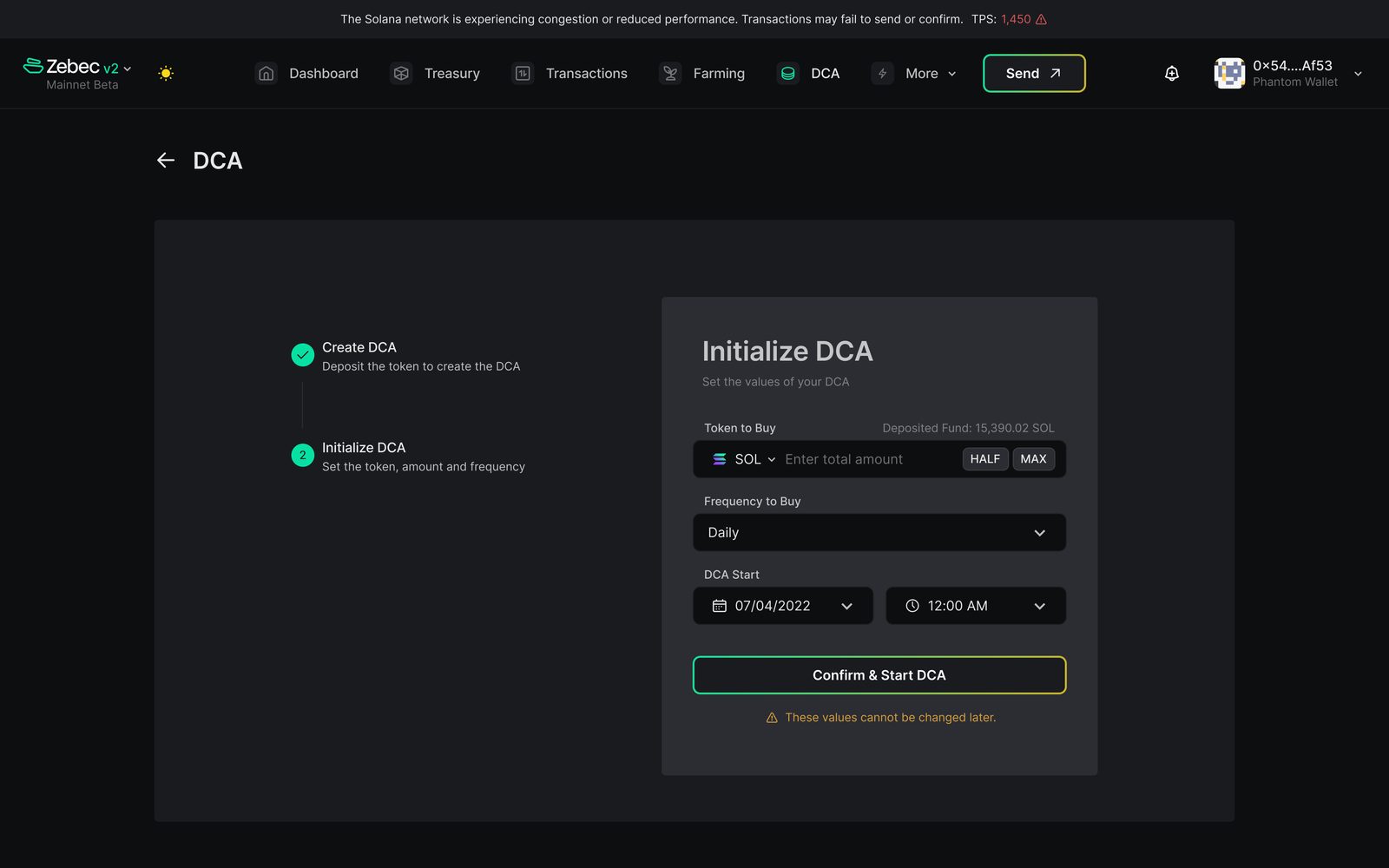
The creation flow — pick an asset, set the frequency, start time and amount per purchase.